
Definition
There is international consensus that malnutrition is the greatest single source of poverty, ill health and underdevelopment in the world today. It is also agreed that preventing malnutrition amongst young children is the most cost effective intervention to stimulate economic growth (World Bank 2005, Copenhagen Consensus 2008).
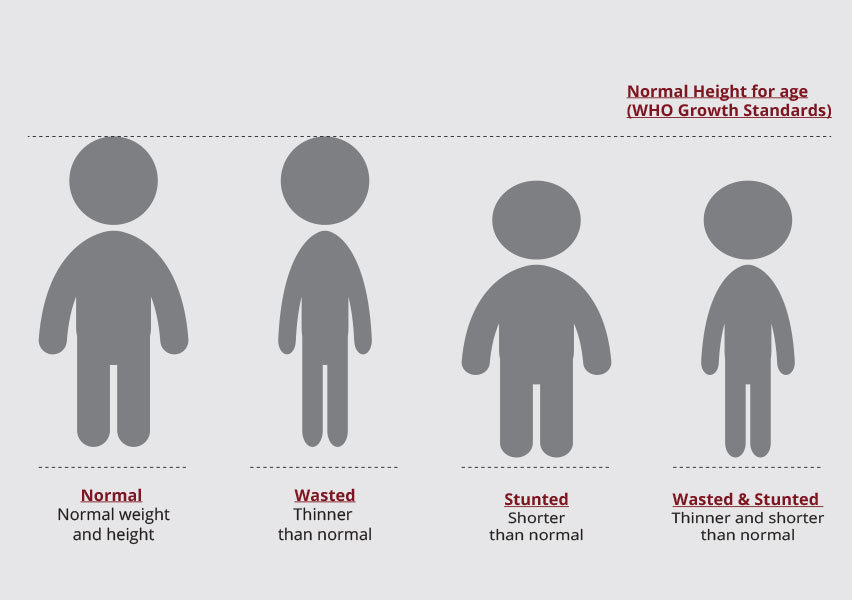
There exist various types of malnutrition. Here we focus on undernutrition:
(a) Acute malnutrition (also known as “wasting” or “starvation”)
There are two forms of acute malnutrition:
- Severe acute malnutrition (severe starvation) is the most extreme form which, if not treated, leads to death. This affects 16 million children globally (UNICEF/WHO/World Bank 2016).
- Moderate acute malnutrition (moderate starvation) is less severe but leads to sever eacute malnutrition if it goes untreated. It affects approximately 34 million children globally (UNICEF/WHO/World Bank 2016).

(b) Chronic malnutrition (also called “stunting”)
This is a condition that develops when children do not eat the correct balance of nutrients in the first 1,000 days of life (from conception to the age of two), resulting in the irreversible stunting of their cognitive and physical development. Thus, maternal nutritional status before and during pregnancy, as well as during breastfeeding, impact the nutritional status of the child.
Effects of stunting at individual level include increased ill health, sub-optimal learning and earning capacity, and greatly reduced life expectancy. These result in huge economic costs to developing countries.
Chronic malnutrition damages the health and prosperity of over one third of all people in developing countries; affecting approximately 156 million children worldwide at any one time (UNICEF/WHO/World Bank 2016) and is the largest cause of child death and poverty in the world (World Bank 2006).
(c) Micronutrient deficiencies (also known as “hidden-hunger”)
This is a consequence of inadequate intake of essential micronutrients (vitamins and minerals), such as vitamin A, iron, zinc and iodine. Such deficiencies manifest when the body does not have sufficient amounts of micronutrients due to insufficient dietary intake and/or insufficient absorption and/or suboptimal utilisation of the vitamin or mineral.
According to WHO, iron deficiency is the most common and widespread nutritional disorder in the world affecting both developed and developing countries: 2 billion people – over 30% of the world’s population – are anaemic, many due to iron deficiency. In developing countries 50% of pregnant woman and around 40% of preschool children are estimated to be anaemic.
Major health consequences of micronutrient deficiencies include poor pregnancy outcome, impaired physical and cognitive development, increased risk of morbidity in children and reduced work productivity in adults.
(d) Underweight
This form of undernutrition includes elements of stunting and wasting. Underweight is often used as an indicator in programmes aimed at preventing and treating malnutrition in children.
Acute and chronic malnutrition are not mutually exclusive – acute malnutrition often develops in a child who is chronically malnourished. Deficiency in micronutrients is also a common denominator among the various types of undernutrition.
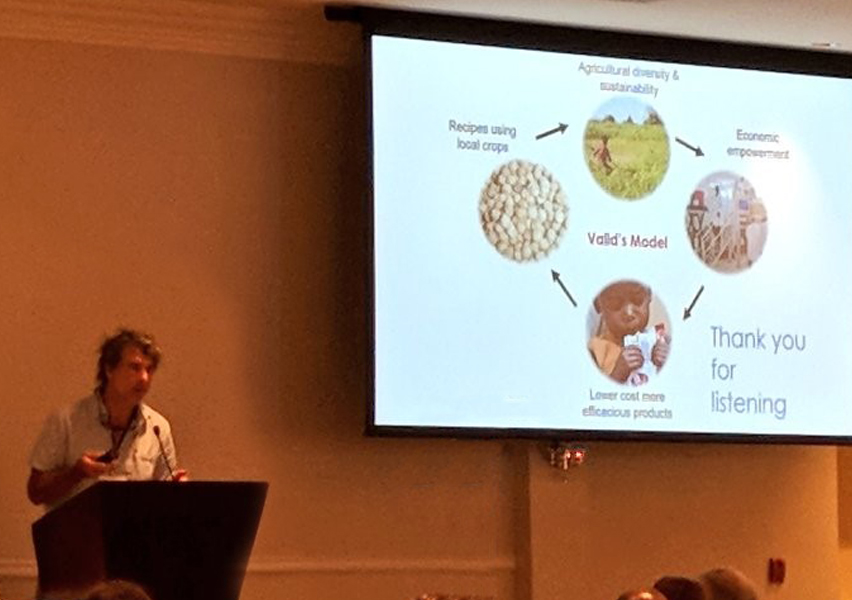
Dr Steve Collins reflects on the opportunities and problems associated with the USD$250 million contribution announced by Administrator, Samantha Power of USAID – a positive catalyst for change?
VALID commissioned and achieved peer-review of a professional report to quantify objectively the overall climate impact profile of the amino-acid enhanced, plant-based RUTF recipe. It has found that the overall global warming potential impacts of the plant-based RUTF recipe are 47%-52% less than the milk-peanut based recipe.
Dr Steve Collins gives a hugely informative and enlightened interview to ENN podcast while discussing his candid Reflections on the UN Global Action Plan on Wasting.